Regulation is borrowed before it is owned
The parts of the brain that manage strong feelings are still under construction throughout early childhood. A child in distress is not choosing to be difficult; their system is overwhelmed and reaching for an adult to steady it.
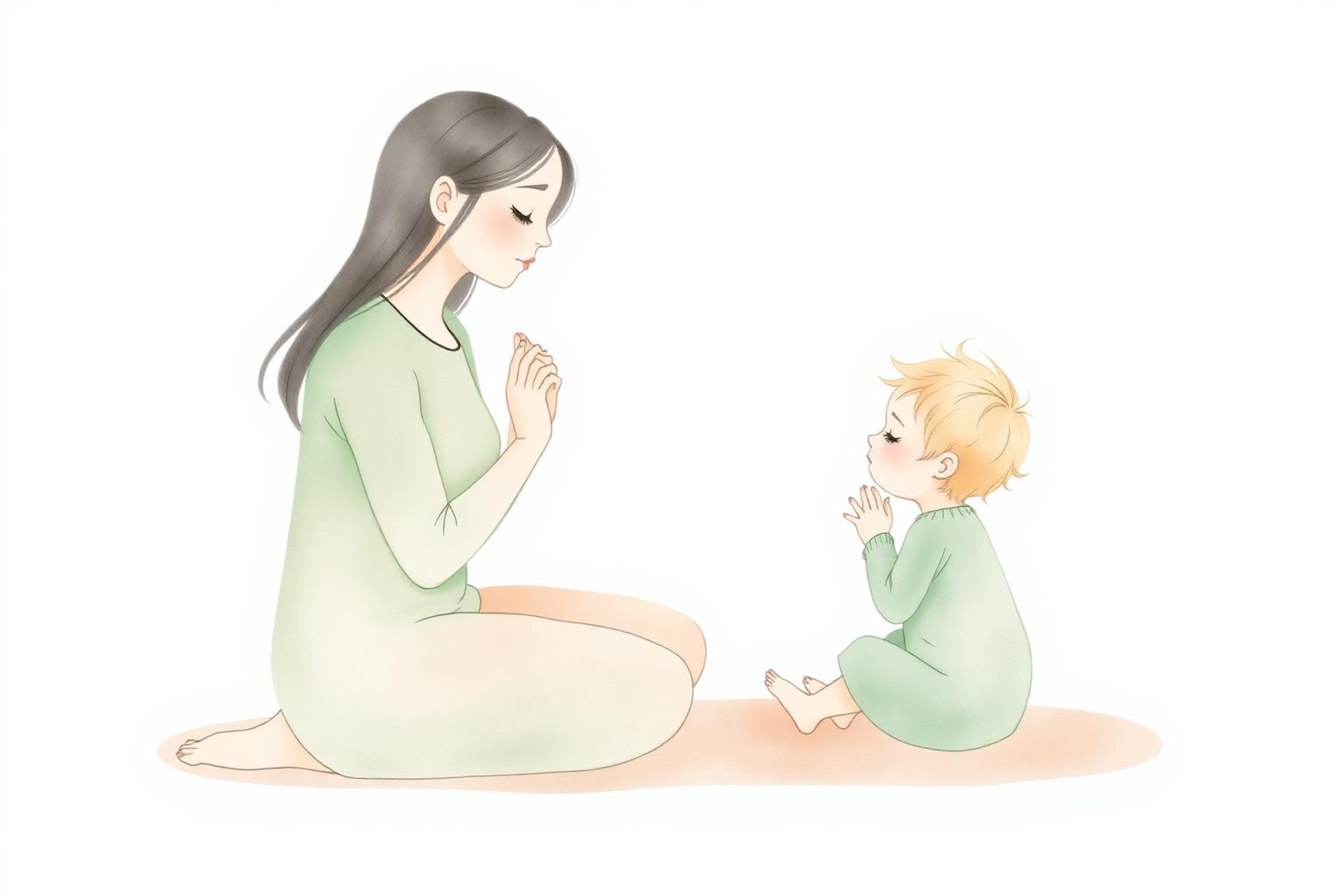
Co-regulation is that steadying: your slower breathing, softer voice and predictable presence give a child's nervous system something to sync with. Over time, and with a great deal of repetition, it becomes their own capacity.
What to do in the moment
Lower yourself physically and lower your voice. Less language, not more — 'I'm here. I've got you.' is usually enough.
Keep everyone safe and wait. Teaching, reasoning and consequences land nowhere while the wave is still cresting.
Offer a body-based option rather than a verbal one: a hand to hold, a heavy cushion, a walk to the window, a drink of water, a push against the wall.
Name it afterwards, briefly and without a lecture: 'That was a big one. You really wanted to stay.'
What helps between the storms
Predictable rhythms and honest warnings before transitions remove a huge amount of daily friction.
Daily movement, outdoor time and genuinely unhurried play do more for regulation than any calm-down chart.
A quiet, un-punitive space children may choose — not be sent to — gives them somewhere to practise coming back down.
Adults need their own regulation plan. You cannot lend a calm you do not have, and noticing that without shame is part of the work.
Where to get support
The workshops 'Regulation techniques' and 'Supporting children's mental health' explore this in an hour, with a booklet of practical strategies for home or setting.
A note on scope: Amy is an early years educator currently studying a Level 9 postgraduate in play therapy, and is not a qualified play therapist. These workshops are education for adults, not therapy. If a child needs clinical support, speak to your GP or public health nurse, who can refer on.
Bring these ideas into practice
Book a workshop to explore this further with Amy.
Trusted early years resources
Every workshop is grounded in Irish early years frameworks and national guidance.
- Aistear: the Early Childhood Curriculum Framework (NCCA)
- Síolta: the National Quality Framework
- Children First national guidance (Tusla)
- First 5: Ireland's strategy for babies & young children
- Early Childhood Ireland
Workshop themes · Book a date · Counties we serve · Play & learning blog · FAQ · About Amy