
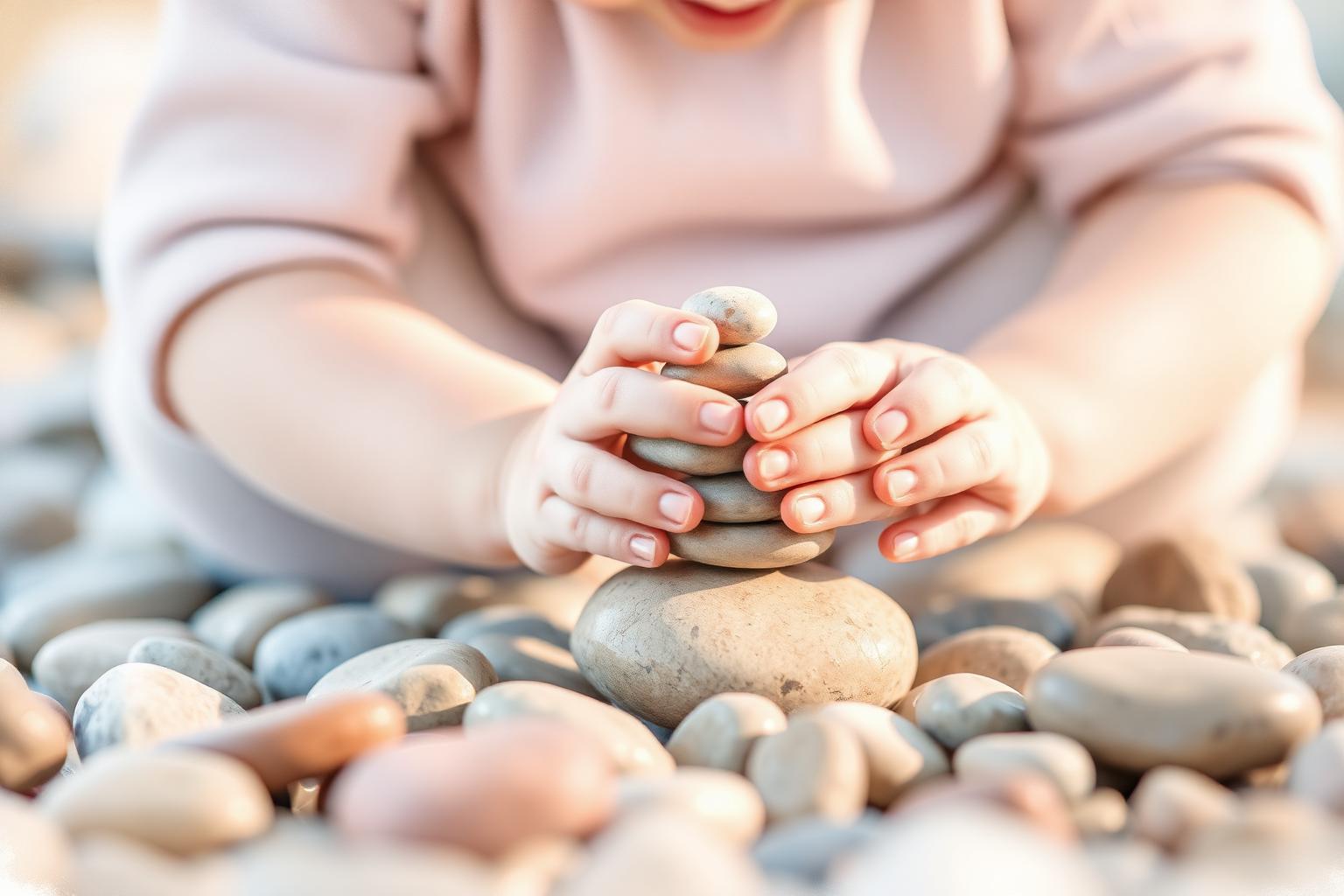
The pace of a child is not the pace of a to-do list
A child at play is doing real work. They are testing what their hands can do, what an object will do, how it feels when a tower falls or a lid finally clicks into place. That work has a rhythm — often much slower than we expect.
When we rush a child through their play, we are not just cutting the game short. We are interrupting their concentration, their sense of agency, and the small, private satisfaction of finishing something on their own terms.
What 'slow' actually looks like
Slow play often looks quite ordinary. A child pouring water between two jugs for ten minutes. Lining up pebbles by size. Repeating the same fold of a piece of paper until it feels right in their hands.
The invitation for us as adults is simply to notice, and then to hold the space open a little longer than we normally would — before we suggest the next thing, before we tidy up, before we take over.
A small practice for this week
Pick one moment a day where you sit near your child while they play, without directing and without your phone. Aim for five minutes at first. Notice what shifts — in them, and in you.
Bring these ideas into practice
Book a workshop to explore this further with Amy.
Trusted early years resources
Every workshop is grounded in Irish early years frameworks and national guidance.
- Aistear: the Early Childhood Curriculum Framework (NCCA)
- Síolta: the National Quality Framework
- Children First national guidance (Tusla)
- First 5: Ireland's strategy for babies & young children
- Early Childhood Ireland
Workshop themes · Book a date · Counties we serve · Play & learning blog · FAQ · About Amy