What is Aistear curriculum? Use the current framework
Aistear is Ireland's early childhood curriculum framework. NCCA published the updated framework in 2024 to support babies, toddlers and young children from birth until they start primary school. It guides relationships, experiences and learning; it is not a purchased activity pack or a fixed weekly list of tasks.
The update gives attention to children's rights, sustainability, diversity, equity and inclusion. Use the official Aistear 2024 framework alongside your setting's policies and current guidance. If you are writing an assignment, check whether the brief asks you to discuss the 2009 framework, the 2024 framework or their differences.
Aistear themes: link to what is actually happening
The themes are Wellbeing, Identity and Belonging, Communicating, and Exploring and Thinking. Begin with children's experience and then consider the relevant theme, rather than designing an activity simply to fill four boxes. Not every observation needs an equally strong link to every theme.
For example, children comparing rolling objects may be exploring movement and sharing ideas. Exploring and Thinking and Communicating may be relevant. Their choices, relationships and sense of belonging still matter, but listing all themes without explaining the connection adds little to your reflection.
Aistear curriculum planning: a small observation note
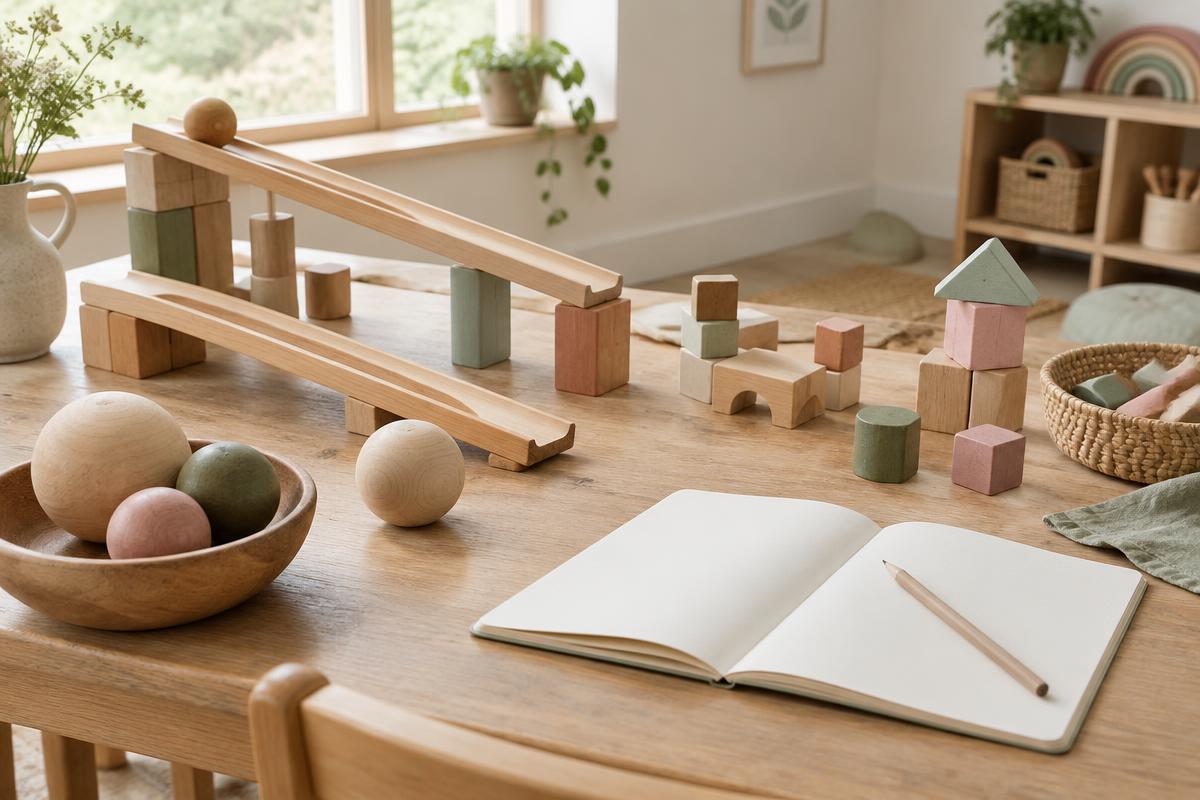
In a hypothetical observation, two children return to a wooden ramp and try different large rolling objects. One says 'This goes further'; the other changes the ramp's height. A useful note records those actions, the words and the context. It does not conclude that either child has mastered a concept from one moment.
Aistear curriculum planning: notice and nurture
Noticing includes interests, participation, communication and context. Ask what the children chose, how they used materials and what enabled them to stay with the idea. A brief note can preserve the evidence, but follow your setting's documentation and consent procedures rather than adopting a new form without agreement.
Nurturing asks what supports the learning relationship and the conditions for participation. In the ramp example, that could mean time to return, accessible materials, room for different communication styles and an adult who listens before offering an answer. Ask who could not join and what adjustment might help; inclusion is part of planning, not a later addition.
Aistear curriculum planning: respond, then reflect
A response might provide a second suitable ramp, a stable surface and safe, age-appropriate objects to compare. Invite exploration rather than demanding a particular result. 'What did you notice?' may be more useful than a quiz question. Check risks, space and the needs of the actual children before setting up any invitation.
Reflect afterwards: did children return to the idea, how did they communicate, whose access improved and what did your intervention change? Perhaps the new setup helped collaboration; perhaps your questions interrupted concentration. Record uncertainty as well as success. The next response should follow what happened, not what the plan predicted.
NCCA's reflective planning and assessing cycle guidance explains noticing, nurturing, responding and reflecting. It supports responsive practice; it does not promise that one documentation style meets every assignment or inspection requirement.
Aistear curriculum planning: keep the record useful
A practical record identifies the observation, your tentative interpretation, the response and what you learned from it. Add a framework connection where it clarifies the learning. Keep personal information to the minimum needed and use only authorised photographs or records. A concise note that informs tomorrow's practice is more useful than decorative paperwork that nobody revisits.
For an introduction, read Aistear explained. For study questions, use the placement reflection guide. You can also explore adult workshop themes or online courses. Amy's €39 one-hour online support is available for students and educators who want to work through a specific concept or planning question.
Frequently asked questions
- What is Aistear curriculum planning?
- It is responsive planning informed by children's learning, interests and participation, using Aistear's framework and guidance rather than a fixed activity checklist.
- What are the Aistear themes?
- The themes are Wellbeing, Identity and Belonging, Communicating, and Exploring and Thinking. Explain the theme connections that genuinely fit your observation.
- What is Aistear's reflective planning and assessing cycle?
- NCCA describes the cycle through noticing, nurturing, responding and reflecting. Use its official guidance alongside your setting's requirements.
Keep reading
- BlogAfter school clubs in Ireland: a parent's choosing guideA warm, practical checklist for choosing a creative club, with questions about costs, collection and the child's experience.Explore
- BlogNature crafts for kids: five gentle ideas for ages 4–12Five low-cost nature crafts for ages 4–12, with age adaptations, responsible collecting and a no-collecting option.Explore
- BlogEarly childhood education: a practical placement reflection guideA placement supervisor's practical reflection prompts: observation, interpretation, response and next steps, without writing your assignment for you.Explore
- BookBook a sessionSee upcoming dates and book onlineExplore
- ContactAsk a questionSend Amy a message about your setting or familyExplore
Sources and further reading
Further reading from Irish national frameworks and public health guidance. All links open on official sites.
- 1.Aistear: the Early Childhood Curriculum FrameworkNCCA
- 2.Síolta: the National Quality Framework for Early Childhood EducationDepartment of Education
- 3.Children First: National Guidance for the Protection and Welfare of ChildrenTusla
- 4.First 5: a whole-of-Government strategy for babies, young children and their familiesGovernment of Ireland
Bring these ideas into practice
Book a workshop to explore this further with Amy.
Trusted early years resources
Every workshop is grounded in Irish early years frameworks and national guidance.
- Aistear: the Early Childhood Curriculum Framework (NCCA)
- Síolta: the National Quality Framework
- Children First national guidance (Tusla)
- First 5: Ireland's strategy for babies & young children
- Early Childhood Ireland
Workshop themes · Book a date · Counties we serve · Play & learning blog · FAQ · About Amy