
Nature crafts for kids: collect less, notice more
Begin with a short look around a familiar garden or permitted outdoor space, not a shopping list of things to collect. What has changed since your last visit? Which leaf feels smooth, and which has a jagged edge? A conversation about one object is enough to begin a creative afternoon.
Use common, already-fallen materials only where collecting is allowed. Do not pull plants, disturb nests or remove living creatures. Leave fungi and unknown berries alone. In sensitive habitats or places with no-collecting rules, sketch, photograph plants without people, or use materials already at home instead. Leave No Trace Ireland's education resources offer a helpful context for responsible outdoor activities.
Nature crafts for kids: leaf rubbing and pattern play
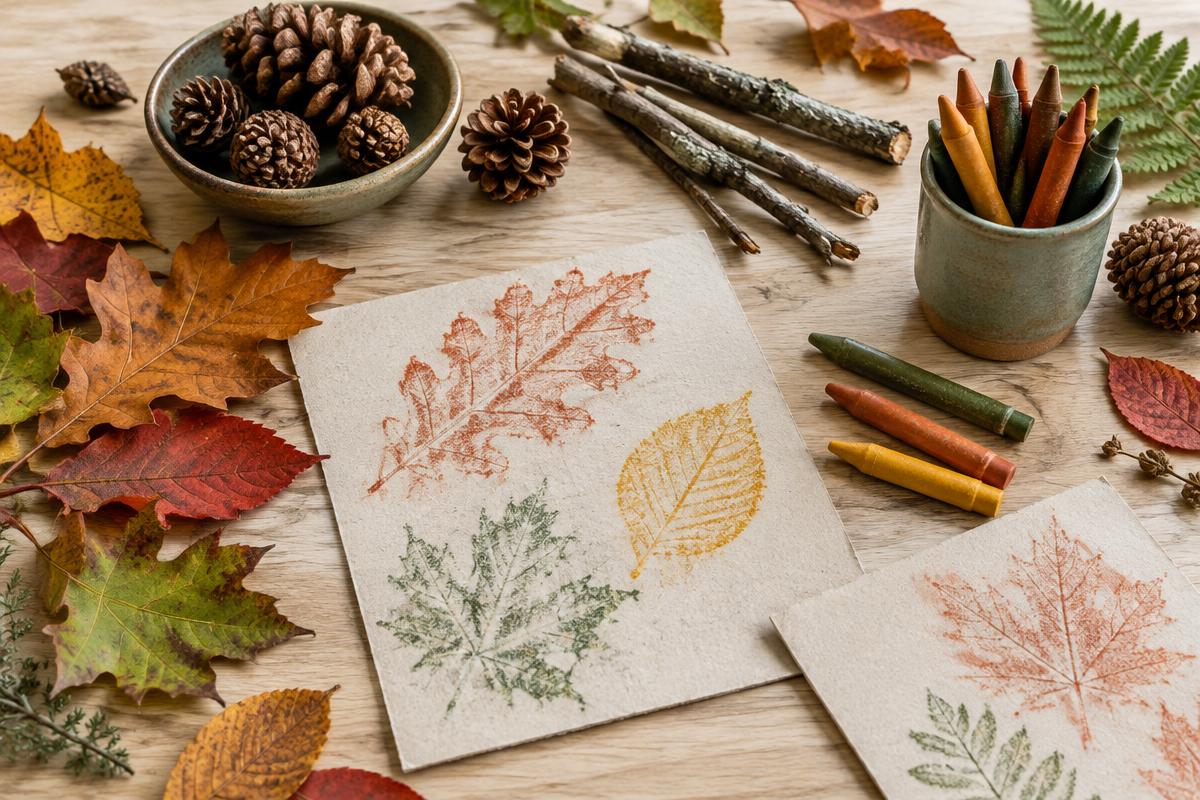
Place a dry fallen leaf under paper and rub gently with the side of a wax crayon. Try turning the leaf, changing pressure or layering two colours. Ask 'What appeared?' rather than correcting the result. If the paper keeps moving, hold it together or use a small amount of removable tape.
For ages 4–6, use one large leaf and a chunky crayon. Older children can compare outlines, make a repeated border or label a plant only after checking a reliable identification source. There is no need to turn every picture into a lesson: noticing one difference is already worthwhile.
Nature crafts for kids: an easy leaf-rubbing setup
Gather paper, crayons and one or two clean leaves. Cover the table and keep the materials within reach. Offer a demonstration if wanted, then let the child decide whether to make a forest, an abstract pattern or something entirely different. Expect the process to interest them more than the final picture.
Nature crafts for kids: three more making invitations
A twig frame: arrange four sturdy, smooth fallen twigs on card and help secure them with suitable glue. Draw a tiny world inside the frame. Adults should handle cutting and any tools that are unsuitable for the child; avoid sharp or splintered wood and long dangling cords.
A temporary nature picture: arrange leaves and pinecones into a creature or pattern on the ground where permitted. Take a picture of the arrangement if desired, then leave the place as you found it. Do not add paint, glitter or glue outdoors, and do not move materials from sensitive habitats.
A cardboard nature window: an adult cuts a window in scrap card. Hold it up to different views and draw the shapes or colours you see. This works in a garden, from a window or beside a houseplant, and requires no collecting at all.
Nature crafts for kids: make a seasonal story card
For the fifth idea, fold scrap paper into a card and draw one thing noticed outdoors: a windy branch, a wet path or a bird. Add a made-up character and tell its story. Younger children can dictate their words; older children can write or create a short comic. Use rubbings or drawings rather than collecting materials where that is the kinder choice.
The same invitation changes with the seasons without needing new equipment. In November, colours, seed shapes and bare branches may catch attention. In spring, simply draw new growth rather than picking it. The NPWS primary-school resources can help families explore Irish species and habitats.
Nature crafts for kids: safety and a little less screen time
Supervise throughout and adapt to the individual child, not age alone. Small parts are unsuitable for children who mouth objects. Check materials for sharp edges, wash hands afterwards and use age-appropriate art supplies. Do not taste wild plants or turn found items into food utensils. If an item cannot be safely identified or cleaned, leave it out.
Offline making can be one part of a balanced day, not a punishment for using a screen. HSE screen-time guidance encourages balance with sleep, play and other activities. For another rainy afternoon, explore our rainy-day ideas. For creative activities with Amy, see Children's Clubs & Camps: early access is open, but dates and children's bookings are not yet confirmed.
Frequently asked questions
- What are easy nature crafts for kids?
- Try leaf rubbings, a twig frame, a temporary nature picture, a cardboard viewing window or a seasonal story card, adapting materials and supervision to the child.
- Can we do nature crafts without collecting anything?
- Yes. Draw through a cardboard window, sketch a plant, or make a story card about something you noticed. Respect local rules and sensitive habitats.
- Are nature crafts suitable for children aged 4–12?
- They can be adapted for that range, but individual needs matter. Use appropriate tools, supervise throughout and avoid small parts for any child who mouths objects.
Keep reading
- BlogAfter school clubs in Ireland: a parent's choosing guideA warm, practical checklist for choosing a creative club, with questions about costs, collection and the child's experience.Explore
- BlogEarly childhood education: a practical placement reflection guideA placement supervisor's practical reflection prompts: observation, interpretation, response and next steps, without writing your assignment for you.Explore
- BlogAistear curriculum planning: one observation, one thoughtful responseA worked planning example for students and educators using Aistear 2024 and NCCA's reflective planning and assessing cycle.Explore
- BookBook a sessionSee upcoming dates and book onlineExplore
- ContactAsk a questionSend Amy a message about your setting or familyExplore
Sources and further reading
Further reading from Irish national frameworks and public health guidance. All links open on official sites.
- 1.Aistear: the Early Childhood Curriculum FrameworkNCCA
- 2.Síolta: the National Quality Framework for Early Childhood EducationDepartment of Education
- 3.Children First: National Guidance for the Protection and Welfare of ChildrenTusla
- 4.First 5: a whole-of-Government strategy for babies, young children and their familiesGovernment of Ireland
Bring these ideas into practice
Book a workshop to explore this further with Amy.
Trusted early years resources
Every workshop is grounded in Irish early years frameworks and national guidance.
- Aistear: the Early Childhood Curriculum Framework (NCCA)
- Síolta: the National Quality Framework
- Children First national guidance (Tusla)
- First 5: Ireland's strategy for babies & young children
- Early Childhood Ireland
Workshop themes · Book a date · Counties we serve · Play & learning blog · FAQ · About Amy