
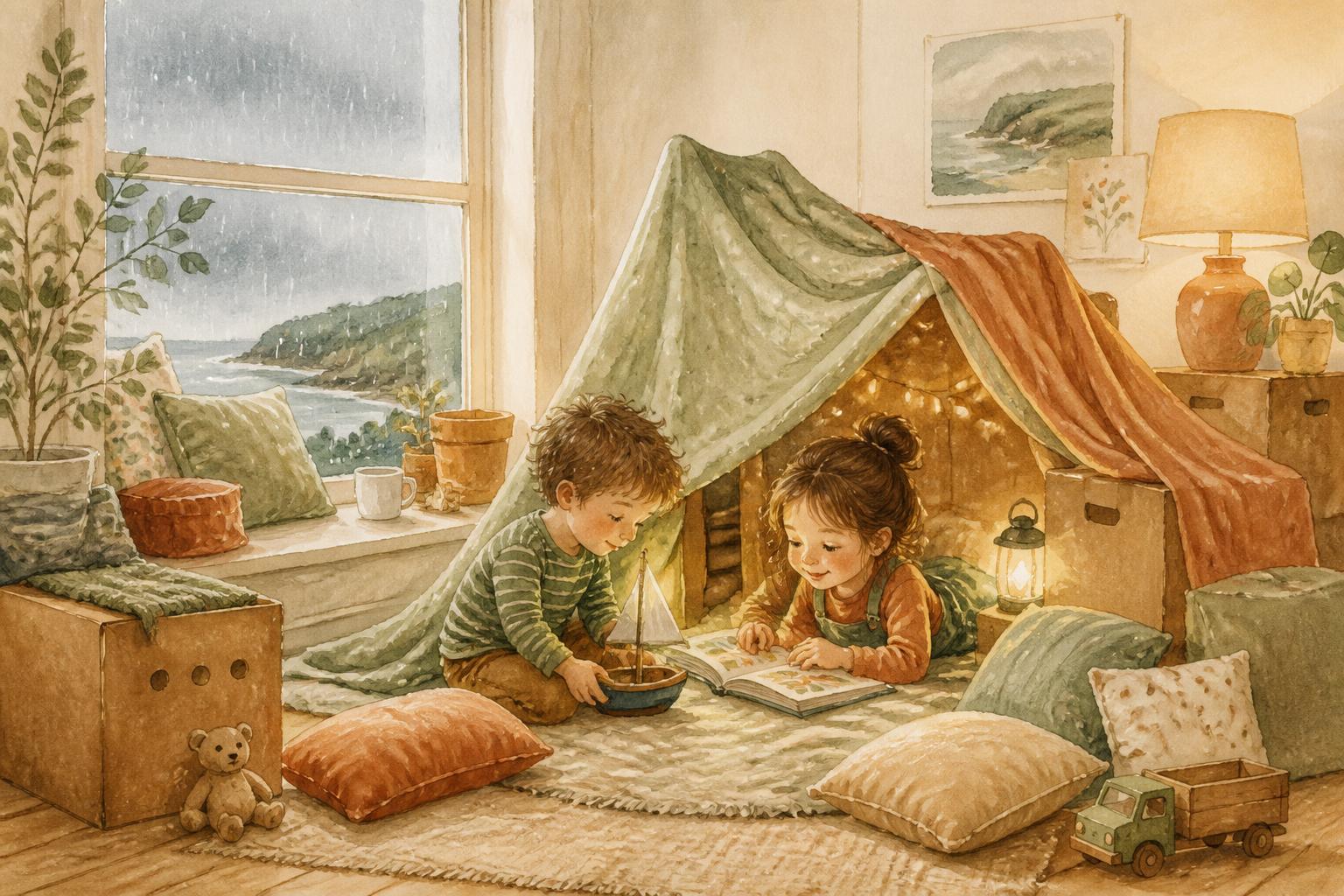
When they have energy to burn
1. Cushion course: sofa cushions, a folded blanket and a chair make a route to crawl, jump and balance along. Movement is regulation, not chaos.
2. Balloon keepy-uppy. One balloon, one rule: don't let it land.
3. Sock basketball into the laundry basket, stepping back a pace each time.
4. Animal walks down the hall — bear, crab, frog, snake.
5. Dance freeze with the radio. Two songs is often enough to reset a mood.
When they need to settle
6. Blanket den over the kitchen table with a torch and a pile of books.
7. Cardboard box anything: post box, boat, garage, washing machine.
8. A tray of water with jugs, a sponge and a couple of cups — on a towel.
9. Playdough with pinecones, buttons and lolly sticks pressed in.
10. Sorting the recycling bin's clean lids and caps into an egg carton by colour.
Infographic
Match the activity to the mood
Pick the row that matches the child in front of you, not the one on the schedule.
Big energy
Cushion course, animal walks, balloon keepy-uppy, sock basketball.
Wired and unsettled
Water tray on a towel, playdough, sorting caps — repetitive and calming.
Quiet and clingy
Blanket den, torch, books, or a long midday bath together nearby.
Bored
One small tray of rotated loose parts, then step back and wait.
Cabin fever
Twenty wet minutes outside. Puddles count as sensory play.
Adult running on empty
Baking, audiobook, window painting. Rest is a legitimate activity.
Supervise all water play, keep it shallow, and never leave a child alone with a tray or bath.
When you are running on empty
11. A basket of loose parts they haven't seen for a month — rotation makes old things new.
12. Baking anything, even if it is just scones from a packet. Stirring is a fine motor workout.
13. Window painting with washable paint, or drawing on the steamed-up glass.
14. A long bath in the middle of the day with cups, funnels and a whisk.
15. Audiobook and a floor cushion. Rest is an activity.
Go out anyway
Puddle jumping, worm hunting and running a stick along railings are all rich sensory play, and twenty wet minutes usually buys a far calmer afternoon than two more hours indoors.
Waterproofs, wellies and spare socks by the door make the difference between 'we can't' and 'we can'. In Ireland, waiting for dry weather means waiting a long time.
The rainy day rule that saves everyone
Set out one invitation, not five. A tray with three things beats a room with thirty, because a child has to bring their own ideas to a small offer.
Then step back. The dull-looking gap before play starts is where imagination actually kicks in — boredom is the doorway, not the problem.
Frequently asked questions
- What can kids do on a rainy day at home?
- Cushion obstacle courses, blanket dens, cardboard box play, water trays on a towel, playdough, sorting recycling caps, baking and audiobooks all work with nothing bought.
- What are good indoor activities for toddlers in Ireland?
- Movement-based play indoors (animal walks, balloon games), contained sensory play like a shallow water tray, and open-ended loose parts from the recycling bin — plus getting outdoors in waterproofs for twenty minutes.
- How do I entertain kids indoors without buying anything?
- Rotate what you already own. Put most toys away and offer one small tray of two or three items at a time; rotation makes familiar things feel new and encourages deeper play.
- Should children play outside in the rain?
- Yes, with the right gear. Puddles, mud and rain are rich sensory experiences, and short outdoor bursts usually make the rest of the day calmer. Waterproofs, wellies and spare socks are the whole trick.
- My child says they're bored — should I fix it?
- Not immediately. Boredom is often the doorway to the best play. Offer one small invitation, then step back and give it a few unhurried minutes before suggesting anything else.
Keep reading
- BlogThe ECCE scheme explained: free preschool in Ireland, in plain EnglishWhat the ECCE scheme is, what age your child needs to be, how many days it covers and how to apply — plus how to tell whether a preschool is a good fit.Explore
- BlogHow to handle toddler tantrums calmly (without giving in)When tantrums start, why they happen, what to do in the middle of one, and what actually reduces them over time — for 2, 3, 4 and 5 year olds.Explore
- BlogForest school in Ireland: what it is and how to bring it homeWhat forest school means, what happens in a session, what it costs in Ireland, and how to get the same benefits in a local park or back garden.Explore
- BookBook a workshopSee upcoming dates and book onlineExplore
- ContactAsk a questionSend Amy a message about your setting or familyExplore
Bring these ideas into practice
Book a workshop to explore this further with Amy.
Trusted early years resources
Every workshop is grounded in Irish early years frameworks and national guidance.
- Aistear: the Early Childhood Curriculum Framework (NCCA)
- Síolta: the National Quality Framework
- Children First national guidance (Tusla)
- First 5: Ireland's strategy for babies & young children
- Early Childhood Ireland
Workshop themes · Book a date · Counties we serve · Play & learning blog · FAQ · About Amy